Bluesky Swaps Founder for VC: Scaling Up or Selling Out?
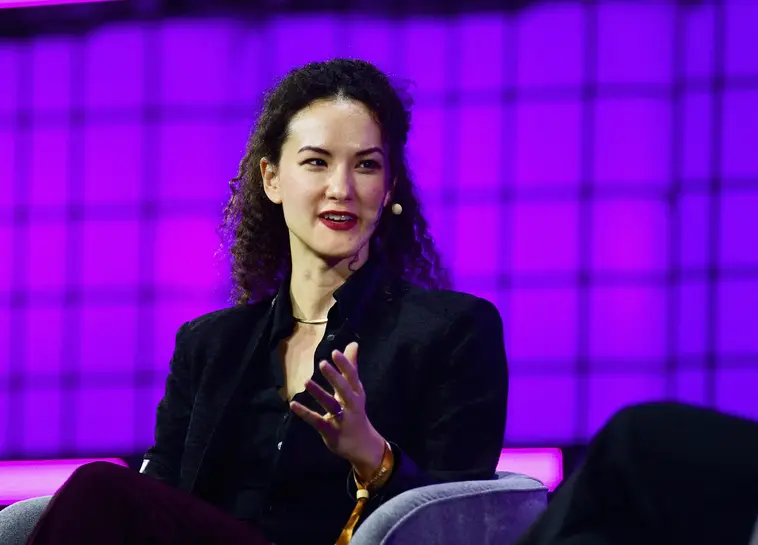
Follow me via: In a move that sent ripples through the decentralized social media world (or, at least, on Bluesky), Jay Graber announced today that she is stepping down as CEO of Bluesky after leading the platform since its spin-out from Twitter in 2021. She will transition to the newly created role of Chief Innovation Officer, focusing on the AT Protocol and long-term tech vision. Taking over as interim CEO is Toni Schneider, a partner at True Ventures and former CEO of Automattic (the company behind WordPress.com, and no, he’s not that Matt guy). The Bluesky board will now search for a permanent replacement. This isn’t just a routine leadership shuffle. Bluesky has grown explosively from a niche Twitter alternative to over 40 million users in 2025 while positioning itself as the anti-X: decentralized, user-owned, and “billionaire-proof.” Graber’s departure marks the end of the founder-CEO era and the beginning of what could be a more corporate, scale-focused phase. Let’s break it down: Graber’s legacy (including last year’s public controversy), Schneider’s background as a VC and operator, and the potential upsides and downsides of letting venture capital steer the ship.
Jay Graber’s Tenure: Visionary Builder or Polarizing Figure?Graber joined Bluesky in 2019 when it was still a Twitter research project aimed at creating an open social protocol. A software engineer by training, with a background in studying technology’s societal impacts, she became the company’s first CEO upon independence in 2021. Her leadership emphasized decentralization via the AT Protocol (whether you agreed with some of her statements, or not), empowering users to control their data, identity, and feeds rather than submitting to a single company’s whims. Under her watch, Bluesky proved a values-driven social network could scale: it weathered post-election growth surges, built an ecosystem of over 500 third-party apps, and maintained a commitment to avoiding the “enshittification” that plagues platforms like X and Facebook. This doesn’t go without saying that the federated ActivityPub exists, and has existed, since at least 2008, and it still remains a strange marker in Bluesky’s history, in that they’ve mostly chosen to pretend it doesn’t exist. Save for the Brid.gy app that welds the two together. But, Graber positioned Bluesky as an “anti-authoritarian” alternative, explicitly contrasting it with Elon Musk’s X and other tech monarchies. She often spoke of stewarding a “collective organism” rather than commanding a product. Her transition statement captures this ethos: “As Bluesky matures, the company needs a seasoned operator focused on scaling and execution, while I return to what I do best: building new things.” However, Graber’s tenure was not without friction. In October 2025, she faced intense backlash and what many described as a public meltdown when pressed on platform moderation and the protection of marginalized voices. The incident began when a trans user highlighted safety concerns over a reinstated transphobic writer on the platform (Jesse Singal). Graber responded dismissively with an all-caps “WAFFLES” (invoking a meme about off-topic replies), followed by a trolling photo of waffles and further posts downplaying community concerns, including quips like “Are you paying us? Where?” Critics accused her of minimizing issues around transphobia, anti-Black racism, and inconsistent moderation that disproportionately affected marginalized users (from shadowbans on Palestinian accounts to failures in addressing harassment). The episode underscored a core tension at Bluesky: its decentralized ideals sometimes clashed with demands for robust safety nets, eroding trust among the very progressive and marginalized communities that fueled its early growth. It was a low point that highlighted how even well-intentioned leadership can struggle with the messy realities of content moderation at scale. Toni Schneider: The VC Operator Stepping InEnter Toni Schneider, not a fresh-faced founder but a battle-tested veteran. Schneider started as a software engineer, founded and sold Oddpost to Yahoo (where he helped build the Yahoo Developer Network), then led Automattic as CEO from 2006 to 2014 (and briefly again in 2024). There, he scaled WordPress.com into a top-10 global site with nearly a billion monthly visitors, all while staying true to open-source principles. For the past decade-plus, he has been a partner at True Ventures, investing in software, connected devices, and climate tech. He is also a Bluesky advisor and investor (via both Automattic and True Ventures) for over a year. In his own announcement, Schneider emphasized continuity: “I deeply believe in what this team has built and the open social web they’re fighting for.” His focus? Helping Bluesky “become not just the best open social app, but the foundation for a whole new generation of user-owned networks.” He promises not to fix what isn’t broken, preserving user ownership of data and graphs, while bringing operational muscle for the next growth phase. Pros and Cons: A VC at the Helm of a “Billionaire-Proof” PlatformHanding interim control to a venture capitalist like Schneider introduces a fascinating shift. Here is a balanced look at what could emerge: Pros:
Cons:
What Comes Next?This transition feels like Bluesky hitting puberty: exciting growth potential, but awkward identity questions. Graber’s move to Chief Innovation Officer keeps her visionary spark alive on the tech side, which is smart. Schneider’s interim role buys time for a thoughtful permanent hire. The real test will be whether Bluesky can scale its open ideals without diluting them, protecting marginalized voices through better (decentralized) tools, not top-down fiat, while building a sustainable business. For users who value the platform’s promise of a user-owned internet, the coming months will be telling. Will it double down on decentralization, or slowly resemble the networks it once critiqued? One thing is clear: the era of pure founder idealism is evolving. Whether that is progress or compromise depends on how faithfully the new leadership honors the original mission. Sources and Further Reading:
mkultra.monster is independent, in that it is written, developed, and maintained by one person. Written, developed, and maintained, not for scrapers, bots, scammers, algorithms, or grifters: But for people to follow and read, just like the way it used to be, back in the golden age of the internet.
mkultra.monster is independent, in that it is written, developed, and maintained by one person. Written, developed, and maintained, not for scrapers, bots, scammers, algorithms, or grifters: But for people to follow and read, just like the way it used to be, back in the golden age of the internet.
FEDIVERSE COMMENTSYou can use your Mastodon or other ActivityPub account to comment on this article by replying to the associated post.
|
 ░ Main ∇ H O M E ∇ /about /portfolio /bookmarks /discography /blogroll /podroll /books /gallery /haxpunks░ Gaming /eternal /emojilife /hardcore_flappy /the_sims /second_life░ Tips, Tricks, & More /install_debian /join_activitypub /fediverse_tips /build_a_website /howtoSL /discoverfedi /wayfindr░ The Archives /posts /notes /logs░ Socials /fediverse /bluesky /twitter /threads /instagram /youtube /discord░ Backend /admin |
|
/ 
REVOSA x AyaSysSecond Life
Unique Visits:
Loading...
Cyberpunk fashion & digital accessories for your second life. |
WEBMENTIONS
Have you written a response to this post? Send me a webmention!
📝 How to send a webmention
To send a webmention, your response page must contain a link to this post. This can be:
After creating your response, paste the URL below and it will be processed automatically.
Loading webmentions...
0 likes, 0 reposts
Unable to load webmentions.